
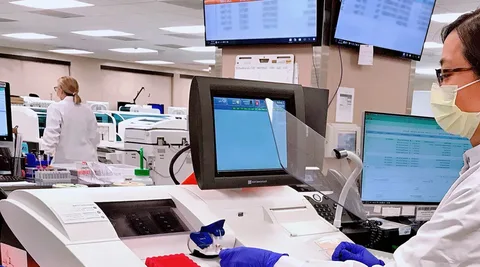
Transforming Your Lab Results into a Meaningful Roadmap
Clinical Biochemistry & Test Interpretation
(Integrativa 4D & Psychoneuroimmunology [PNI] Guidance)
You may have pages of lab results, long lists on e-Nabız, and the usual phrase:
“Everything is normal, just be mindful.”
But you don’t feel “normal.”
In this module, I interpret your blood tests through the lens of Integrativa 4D BioDesign and psychoneuroimmunology (PNI).
This means I don’t just look at numbers; I evaluate simultaneously:
-
Your biochemistry,
-
Your epigenetic imprints,
-
Your microbiota,
-
Your mind–body (PNI) axis.
The goal is not to memorize each value, but to place all your results in the context of your life story.
Who is this module for?
-
Those who say: “My labs are normal, but I don’t feel well.”
-
Experiencing fatigue, headaches, weight, sleep, digestion, or mood issues without a clear diagnosis.
-
Hearing “borderline, continue monitoring” too often.
-
Seeing dozens of results in e-Nabız and asking: “What do these mean for me?”
-
Wanting to understand existing data before moving to functional modules (hormones, weight, gut, epigenetics, PNI).
-
Preferring targeted insight over unnecessary additional tests.
Common Concerns
-
Persistent fatigue, low energy, waking up tired.
-
Recurrent B12, vitamin D, iron/ferritin imbalances.
-
Mildly elevated or fluctuating liver enzymes.
-
Uncertainty regarding insulin resistance.
-
Confusion about HbA1c, triglycerides, cholesterol.
-
Slightly elevated CRP or suspicion of chronic inflammation.
-
Conflicting opinions from different physicians.
Integrativa 4D & PNI Lab Interpretation
We approach your lab results across four dimensions with a PNI perspective:
1. Biochemistry & Metabolic Axis
-
Detailed review of your panels:
-
Glucose, insulin, HOMA-IR, HbA1c
-
Lipid profile (HDL, LDL, triglycerides, etc.)
-
Liver & kidney function
-
Complete blood count (CBC)
-
Vitamin and mineral levels (B12, folate, D, iron/ferritin, etc.)
-
Thyroid panel and other hormones if needed
-
Inflammatory markers (hs-CRP, etc.)
-
-
Values are interpreted not only as “within/outside reference ranges” but in functional ranges and in relation to your symptoms.
-
For example: borderline “normal” values that may still pose risk are highlighted.
2. Epigenetic Imprints & Lifestyle Reflections
-
Epigenetic testing is optional; however:
-
Existing labs,
-
Sleep patterns,
-
Nutrition,
-
Activity & stress profiles
provide strong insight into your biological aging pace.
-
-
Recurring inflammation, chronic insulin resistance, liver load, and oxidative stress help identify whether your system is “epigenetically accelerated” or preserved.
-
When needed, epigenetic age testing can be introduced as an advanced analysis.
3. Microbiota & Gut–Liver Axis
-
Many biochemical markers reflect gut and liver function:
-
Deficiencies in iron, B12, vitamin D, magnesium
-
Elevated triglycerides, fluctuating liver enzymes
-
Mild CRP elevation, chronic inflammation signals
-
-
These are assessed alongside gut barrier integrity, microbiota balance, and liver load.
-
Decisions about microbiota testing are guided by your labs and clinical context.
4. Mind–Body & PNI Axis
-
Psychoneuroimmunology (PNI) examines how emotions, stress, trauma, and belief patterns impact:
-
Nervous system,
-
HPA axis (stress–cortisol),
-
Immunity,
-
Hormones, and biochemical markers.
-
-
Sleep, chronic stress, work-life load, and past challenging events are analyzed in parallel with cortisol reflection, glucose–insulin balance, inflammatory markers, and immune response.
-
For example, the effects of prolonged high-intensity work on triglycerides, HbA1c, liver enzymes, and CRP are seen clearly—revealing how stress manifests biochemically.
Tests Used in This Module
-
Priority is given to existing labs. Additional tests are only recommended if targeted and necessary.
-
Examples:
-
Basic biochemistry panel, CBC, vitamin/mineral levels, thyroid and relevant hormones, inflammatory markers
-
If indicated, further tests for insulin resistance, advanced liver/metabolic markers, microbiota, epigenetic age, or cortisol rhythm.
-
Module Process
1. Preparation – Viewing Labs through 4D & PNI Lens
-
Share lab results (PDF, photo, e-Nabız output) before the appointment.
-
Complete a short form/initial conversation regarding: symptoms, sleep, stress, nutrition, activity, and psychosocial load.
2. Consultation – Clinical Biochemistry & PNI Analysis
-
All values are interpreted together, not in isolation.
-
Priority axes are clarified: which are under stress, which are stable, which are borderline.
-
PNI perspective integrates mind–body story with lab results.
3. Personalized 4D Roadmap Proposal
-
Primary focus areas are determined: hormones, weight/metabolism, gut/microbiota, epigenetic age, or mind–body (PNI).
-
Targeted additional tests recommended only if truly necessary.
4. Summary & Guidance
-
Clear, concise overview of strong and weak/risky axes.
-
Optionally, transition to other modules (hormone, weight, gut, epigenetic, PNI) in a controlled manner.
Benefits of This Module
-
Understand which results to monitor seriously instead of worrying unnecessarily.
-
Identify points where your body signals dysfunction, explained from functional and PNI perspectives.
-
Avoid redundant tests and focus on meaningful assessments.
-
Build a clear, realistic foundation before starting other functional modules.
-
Become an active participant in understanding your biology rather than just a patient.
Medical Disclaimer
-
This module is not for diagnosis, starting, stopping, or adjusting medications.
-
The goal is to transform your lab results into an understandable guide through Integrativa 4D BioDesign and PNI frameworks.
-
Official diagnoses and medication management decisions remain with your treating physicians; referrals and collaborations with specialists are made when necessary.